3D Product Demos: What Actually Works (And What's Just Hype)

Executive Summary
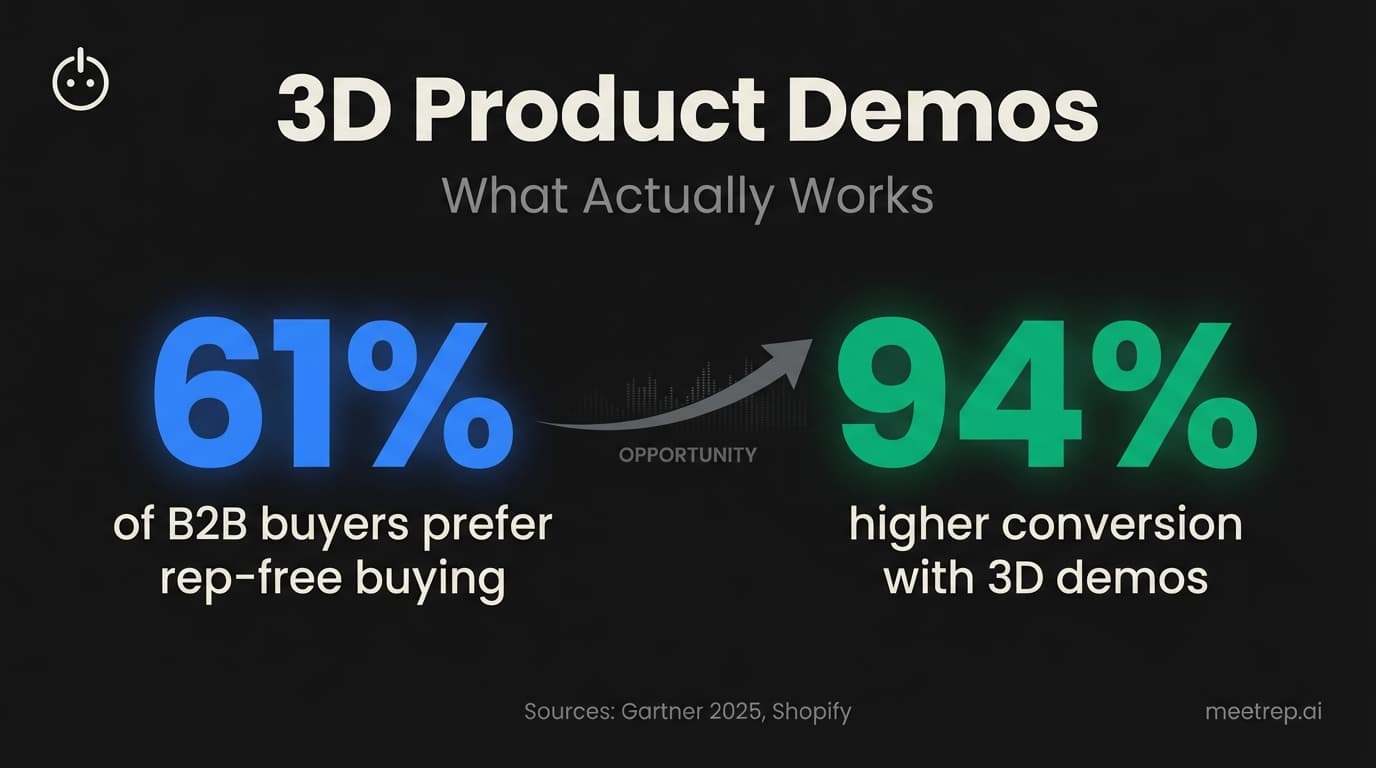
- 3D product demos show 94% higher conversion rates—but only when implemented right
- The market is splitting into three tiers: static viewers, interactive configurators, and AI-powered "agentic" demos
- By 2026, 30% of B2B brands will have immersive commerce strategies (per Gartner). The other 70% will be catching up.
- Before investing, know exactly which tier you need—cool factor alone doesn't pay back
Here's a stat that stopped me cold: 61% of B2B buyers now prefer a rep-free buying experience. Not "would tolerate." Prefer.
And yet most companies still force prospects through a "Book a Demo" form and pray someone shows up. The 3D product demo space has exploded as one answer to this gap—promising interactive, self-serve experiences that convert without burning sales hours. But here's the thing. A lot of what gets marketed as "3D demos" ranges from genuinely useful to expensive gimmicks.
I've spent years building sales automation tools—first at GoCustomer.ai, now at Rep. I've watched this space closely. And I've got opinions about what actually moves pipeline versus what just looks cool in a vendor pitch.
What Is a 3D Product Demo, Really?
A 3D product demo is an interactive digital experience that lets prospects explore your product through three-dimensional visualization—rotating, zooming, clicking into features, and sometimes customizing options in real-time. Unlike static images or linear videos, 3D demos give users control over what they see and when.
But that definition is where the clarity ends. The term "3D product demo" now covers everything from a spinnable product image on an e-commerce page to a fully autonomous AI agent walking prospects through a live software environment.
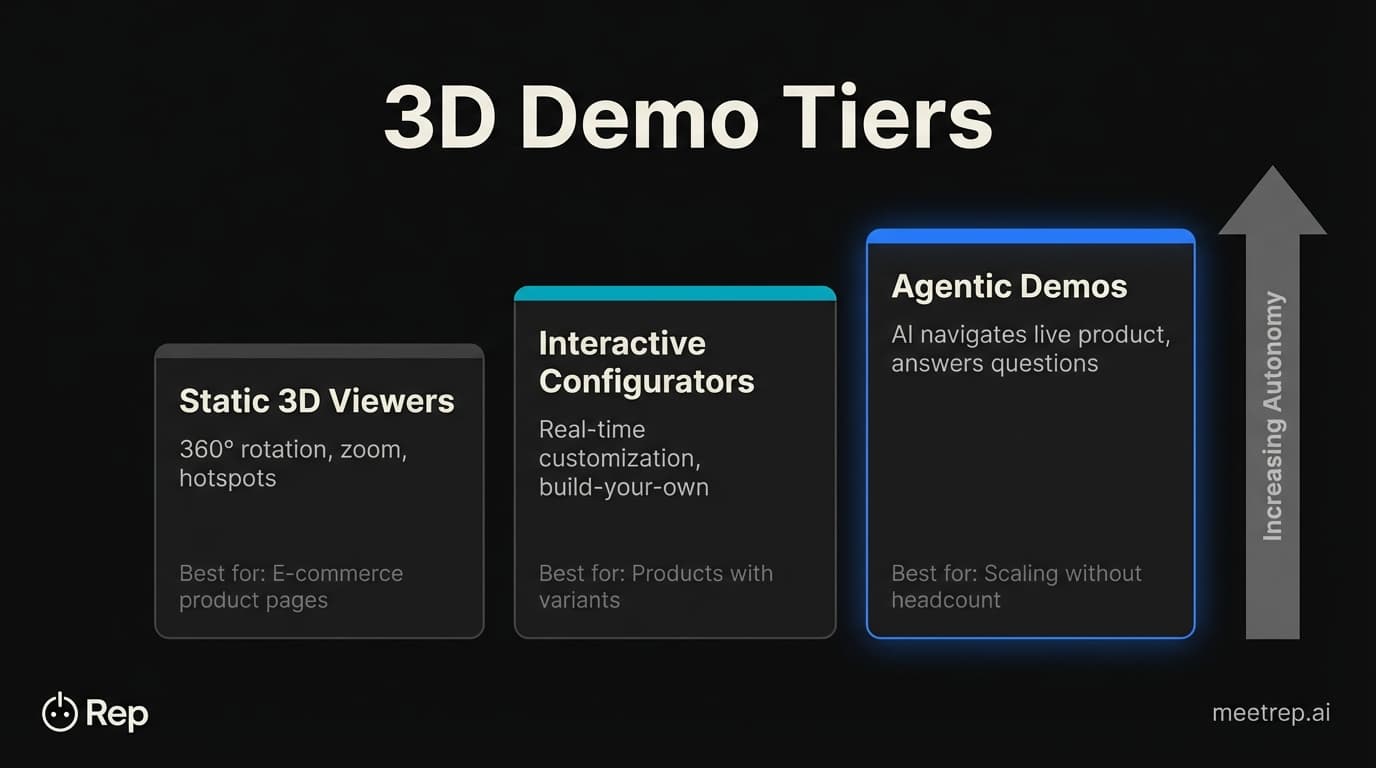
So I think about it in three distinct tiers:
| Tier | What It Is | Best For | Limitations |
|---|---|---|---|
| Static 3D Viewers | 360° rotation, zoom, basic hotspots | Physical products on e-commerce pages | No real interactivity; passive viewing |
| Interactive Configurators | Real-time customization, "build your own" options | Products with variants (colors, features, specs) | Still requires prospect to drive; no guidance |
| Agentic Demos | AI that autonomously navigates live products, answers questions, adapts in real-time | SaaS, complex products, scaling demos without headcount | Newer category; fewer proven vendors |
Most "3D product demo" content lumps these together. That's a mistake. The conversion mechanics, costs, and use cases are completely different.
Key Insight: Before evaluating vendors, know which tier you actually need. Buying an enterprise configurator when you need a basic product viewer is expensive overkill. Buying a static viewer when you need adaptive demos is a waste of time.
Why 3D Demos Actually Work (The Data)
I'm skeptical of "cool factor" justifications. What does the actual data show?
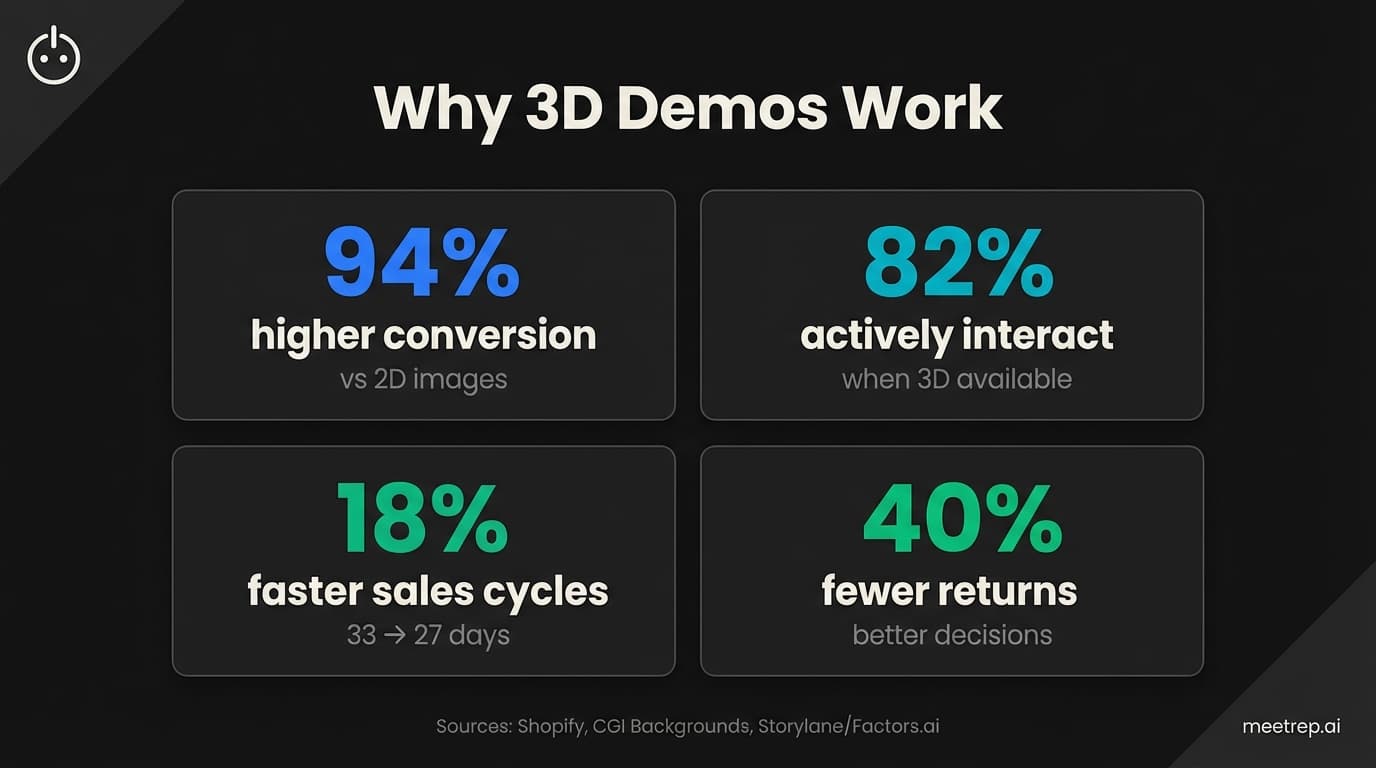
The Data:Shopify merchants using 3D content see 94% higher conversion rates compared to those using only 2D images. That's not a marginal improvement. That's nearly double.
But let's unpack why this happens, because the number alone doesn't tell you if it'll work for your situation.
Engagement is dramatically higher. According to CGI Backgrounds' 2025 research, 82% of viewers interact with 3D assets when they're available. Compare that to passive video viewing where you're lucky to get 50% completion rates.
Interactive beats static.Demand Gen Report's 2024 survey found that 91% of B2B buyers prefer interactive content over static content. They want to control the experience. They want to explore at their own pace.
Sales velocity increases.Storylane and Factors.ai analyzed 110,257 web sessions and found deals with interactive demo touchpoints closed 18% faster—sales cycles dropping from 33 days to 27 days.
And here's one for e-commerce specifically: 3D visualization reduces return rates by up to 40%. When people can actually inspect products from every angle before buying, they make better decisions. Fewer surprises. Fewer returns.
What we learned at GoCustomer: We originally assumed video demos would be "good enough" for early-stage prospects. They weren't. Prospects watched passively, nodded along, then ghosted. When we tested interactive approaches, engagement metrics tripled. People who click around remember more than people who watch.
The Problem with Most "3D Demo" Approaches
Here's where I get a bit contrarian.
A lot of what vendors call "3D product demos" are really just dressed-up screenshots. Tools that capture your product interface, let you add some hotspots and tooltips, and call it interactive.
That's fine for certain use cases. But it creates a problem: you're showing a facade, not the real product.
One industry critique I keep seeing: "These tools create a copy of your product... a facade that prevents showing how your product truly solves a problem." When the demo doesn't match the actual product experience—when it's a polished screenshot that hides real complexity—you're setting up for a rough post-sale reality check.
The other issue? Scalability. Screenshot-based demos still need humans to drive live calls. They still need someone to answer questions in real-time. If you're getting 500 inbound demo requests a month and your team can handle 200, the pretty click-through tour doesn't solve your actual problem.
Common mistake: Treating 3D demos as primarily a "marketing content" problem instead of a "sales capacity" problem. Yes, you need good assets. But the bigger opportunity is removing the human bottleneck from early-stage demos entirely.
Enter Agentic Demos: The 2026 Shift
There's a term gaining traction that captures what I think comes next: "agentic demos."
An agentic demo isn't a pre-recorded walkthrough or a click-through screenshot tour. It's an AI agent that autonomously navigates your live product, answers prospect questions in real-time, and adapts the demonstration flow based on what that specific prospect cares about.
Think about the difference. Traditional interactive demo: prospect clicks through pre-determined paths. Agentic demo: AI responds to "Can you show me how this works for teams over 100 people?" by actually showing them—navigating to the right screens, pulling relevant examples, answering follow-up questions.
This is why we built Rep the way we did. Rep joins video calls as an AI participant, shares its screen, and walks through your actual product live. It's not showing screenshots. It's navigating real software, answering questions from its knowledge base, and extracting insights from every conversation.
Why we built Rep this way: When I looked at the demo automation market, I saw two camps: video tools (linear, passive) and screenshot tools (interactive but static). Neither solved the fundamental problem—giving prospects a live, responsive demo experience without needing a human on the other end. Agentic AI does.
The broader market agrees this is where things are heading. Precedence Research projects the agentic AI market will grow from $7.55 billion in 2025 to nearly $200 billion by 2034—a 43% CAGR. That's not a niche trend.
How 3D Demos Compare to Video Demos
I get this question a lot: "Should we do 3D interactive demos or just invest in better video content?"
Honestly, it depends on your product and buyer.
| Factor | 3D Interactive Demo | Video Demo |
|---|---|---|
| User control | Full—rotate, zoom, explore any angle | None—fixed linear pace |
| Exploration style | Self-directed, any order | Pre-determined camera path |
| Customization | Real-time options (configurators) | Pre-recorded variations only |
| Best for | Products with physical complexity, customizable features, technical buyers who want to poke around | Storytelling, emotional appeal, brand building |
| Production time | 1-4 weeks (AI-assisted) to 8+ weeks (complex) | 2-6 weeks typical |
| Engagement style | Active—82% interact when available | Passive viewing |
My take? Video still wins for emotional brand storytelling and top-of-funnel awareness. But once a prospect is evaluating your product—once they're trying to figure out if it actually does what they need—interactive formats consistently outperform.
The data backs this up. Interactive approaches show 7-8x higher conversion rates in evaluation contexts. Not because video is bad. Because by that stage, buyers want control, not narration.
What 3D Product Demos Actually Cost
Nobody talks honestly about pricing in this space. So let me be direct.
| Tier | Typical Cost Range | What You Get |
|---|---|---|
| Basic 3D rendering | $250-500 per product | Single 3D model, spinnable viewer |
| Interactive configurator | $10,000-25,000 project cost | Real-time customization, multiple variants |
| Enterprise platform license | $50,000-150,000/year | Full platform access, multiple products, integrations |
| Agentic demo platforms | Varies widely | AI-driven live demos, conversation capabilities |
But here's what vendors don't emphasize: 3D content can actually reduce your overall costs.
Forrester research (via Omi.so) found that brands using 3D visualization reduced production costs by 58% compared to traditional photography. No studio shoots. No physical prototypes for every variant. No reshoot when you change colors.
Target reported a 70% cost reduction versus traditional photography—and a 75% reduction in time-to-market.
So while the upfront investment looks steep, the math often works when you factor in what you're replacing.
My recommendation: Don't start with the fanciest option. Start with your actual bottleneck. If prospects are bouncing because they can't visualize your physical product, a basic 3D viewer might be enough. If you're losing deals because you can't demo fast enough, that's a different problem requiring a different solution.
Real Companies, Real Results
Theory is nice. Results matter more. Here's what I've found in verified case studies:
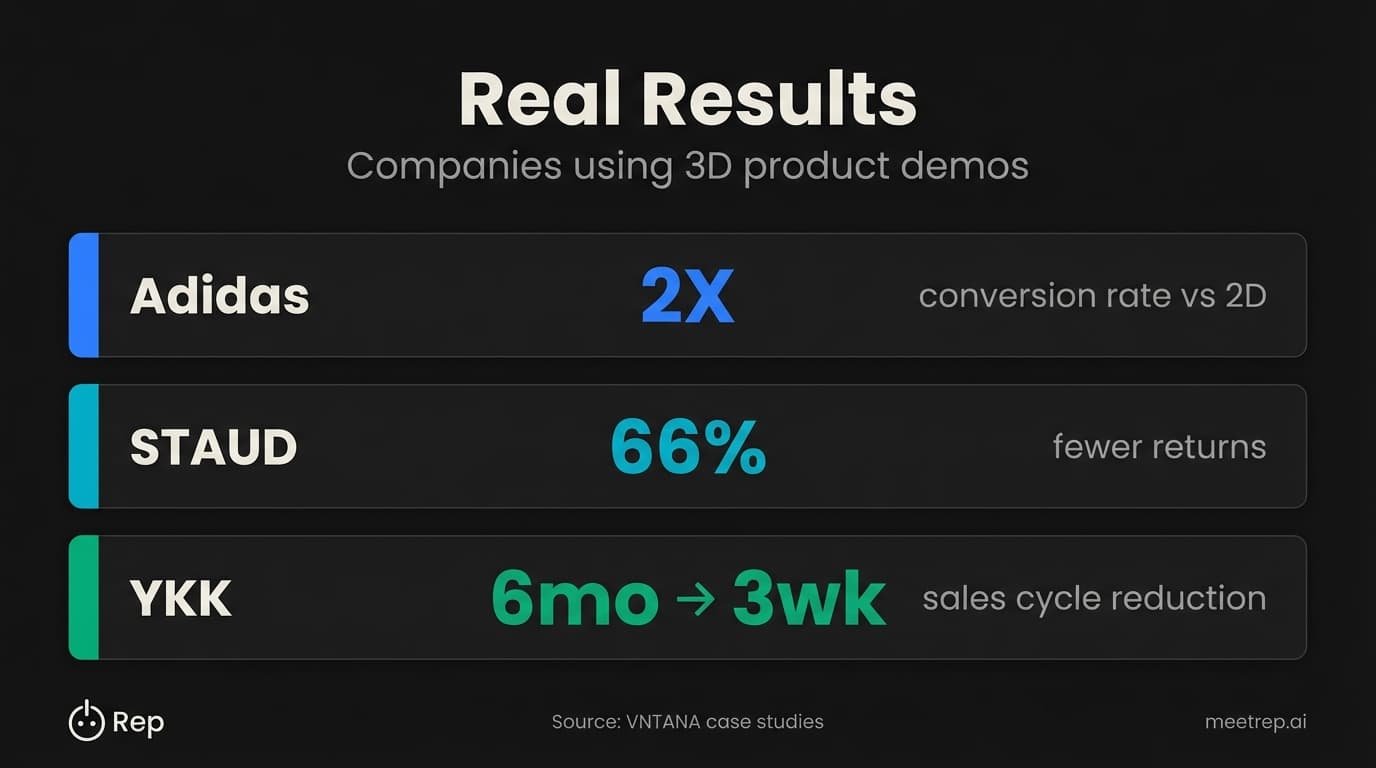
Adidas partnered with VNTANA for 3D product visualization. Results: 2X conversion rate versus 2D images, and they processed 2,500+ shoe models in one hour—work that previously took six weeks.
STAUD (fashion brand) worked with VNTANA and saw a 66% drop in return rates after implementing 3D product views. When customers can inspect the bag from every angle before buying, they know what they're getting.
YKK (industrial zippers and fasteners) compressed their sales cycle from six months to three weeks using a VNTANA-powered 3D configurator. B2B buyers could spec out custom orders without waiting for physical samples.
Hitachi implemented four distinct buyer journeys—video, short interactive, long interactive, and sandbox—letting prospects self-select based on where they were in their evaluation. That's sophisticated. That's meeting buyers where they are.
These aren't vanity metrics. They're pipeline and revenue.
Implementation: Where to Start
If you're convinced 3D demos make sense but unsure where to begin, here's the sequence I'd follow:
- Audit your current drop-off points. Where are prospects bouncing? At the "Book a Demo" form? During pricing discussions? After initial calls? This tells you which tier you need.
- Determine your actual bottleneck. Is it content (people can't visualize your product) or capacity (you can't demo fast enough)? Different problems, different solutions.
- Start smaller than feels comfortable. Test one product line. Measure conversion changes. Expand based on data, not vendor promises.
- Choose the right tier for your maturity.
- Measure what matters. Track demo-to-opportunity conversion, not just "views" or "engagement time." Pretty dashboards don't pay commissions.
The Future: Immersive Commerce Is Coming Fast
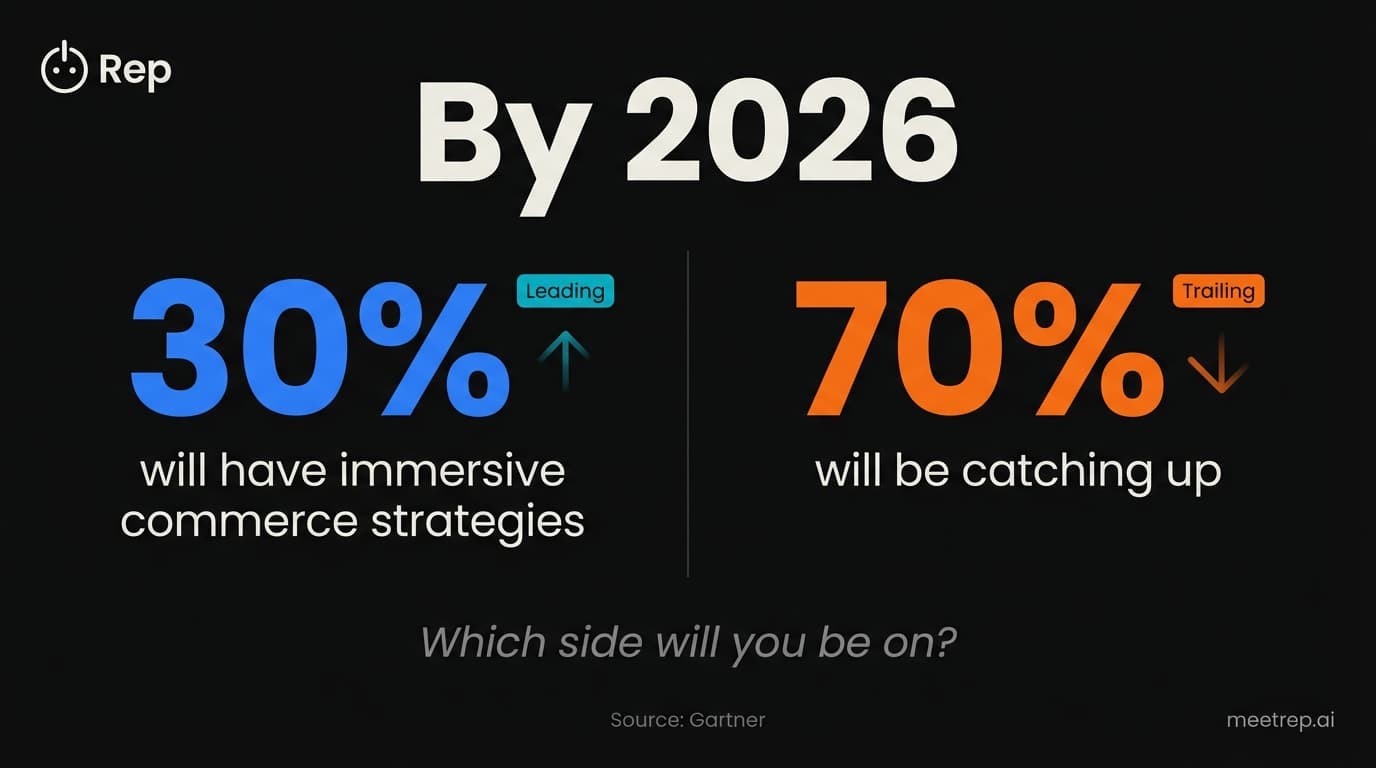
Gartner predicts that 30% of global B2B brands will have immersive commerce strategies by 2026. That's next year.
Which means 70% won't. And that 70% will be playing catch-up.
I think the split will happen fast. Companies that treat product visualization as strategic—that move from "Book a Demo" gates to self-serve immersive experiences—will outcompete those still relying on slides and screen shares.
The winners won't just have prettier 3D assets. They'll have autonomous systems that can show, tell, and sell without requiring a human in every loop.
That's the future we're building toward at Rep. And if the market data is right, that future is closer than most realize.
The shift from static content to interactive experiences isn't a trend—it's a permanent change in how buyers evaluate products. Gartner's data is clear: the majority of B2B buyers prefer to research and evaluate without talking to sales reps at all.
That creates a choice. You can fight that preference with more aggressive outbound and more "Book a Demo" friction. Or you can meet buyers where they are with experiences that let them explore, learn, and qualify themselves.
The 3D product demo space is one answer. Agentic AI demos are another. The companies that figure out the right combination—for their product, their buyers, their capacity constraints—will have a real edge.
We're betting that autonomous, AI-driven demos will be a big part of that future. If you're curious what that looks like in practice, Rep is where we're building it.

Nadeem Azam
Founder
Software engineer & architect with 10+ years experience. Previously founded GoCustomer.ai.
Nadeem Azam is the Founder of Rep (meetrep.ai), building AI agents that give live product demos 24/7 for B2B sales teams. He writes about AI, sales automation, and the future of product demos.
Frequently Asked Questions
Table of Contents
- What Is a 3D Product Demo, Really?
- Why 3D Demos Actually Work (The Data)
- The Problem with Most "3D Demo" Approaches
- Enter Agentic Demos: The 2026 Shift
- How 3D Demos Compare to Video Demos
- What 3D Product Demos Actually Cost
- Real Companies, Real Results
- Implementation: Where to Start
- The Future: Immersive Commerce Is Coming Fast
Ready to automate your demos?
Join the Rep Council and be among the first to experience AI-powered demos.
Get Early AccessRelated Articles
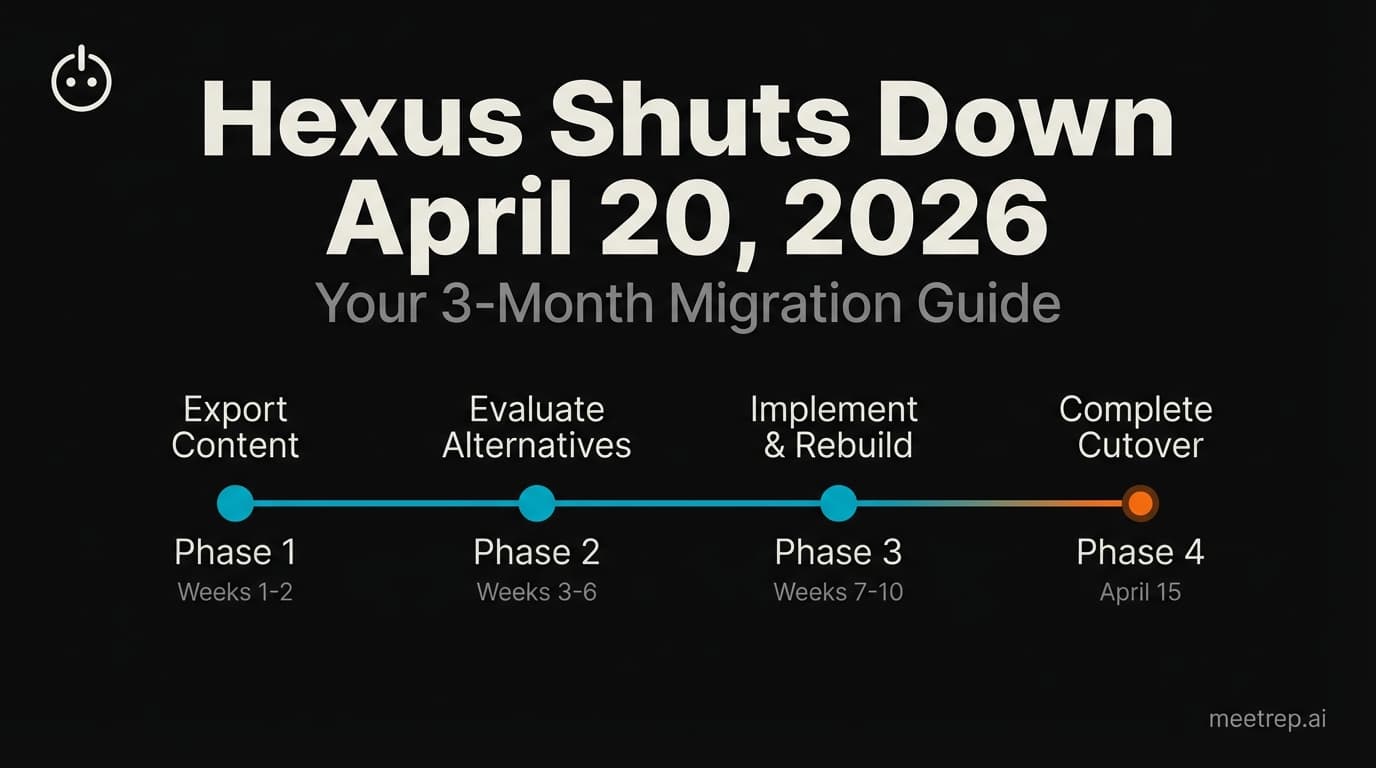
Hexus Acquired by Harvey AI: Congrats & What It Means for Demo Automation Teams
Hexus is shutting down following its acquisition by Harvey AI. Learn how to manage your migration and discover the best demo automation alternatives before April 2026.
Why the "Software Demo" is Broken—and Why AI Agents Are the Future
The traditional software demo is dead. Discover why 94% of B2B buyers rank vendors before calling sales and how AI agents are replacing manual demos to scale revenue.
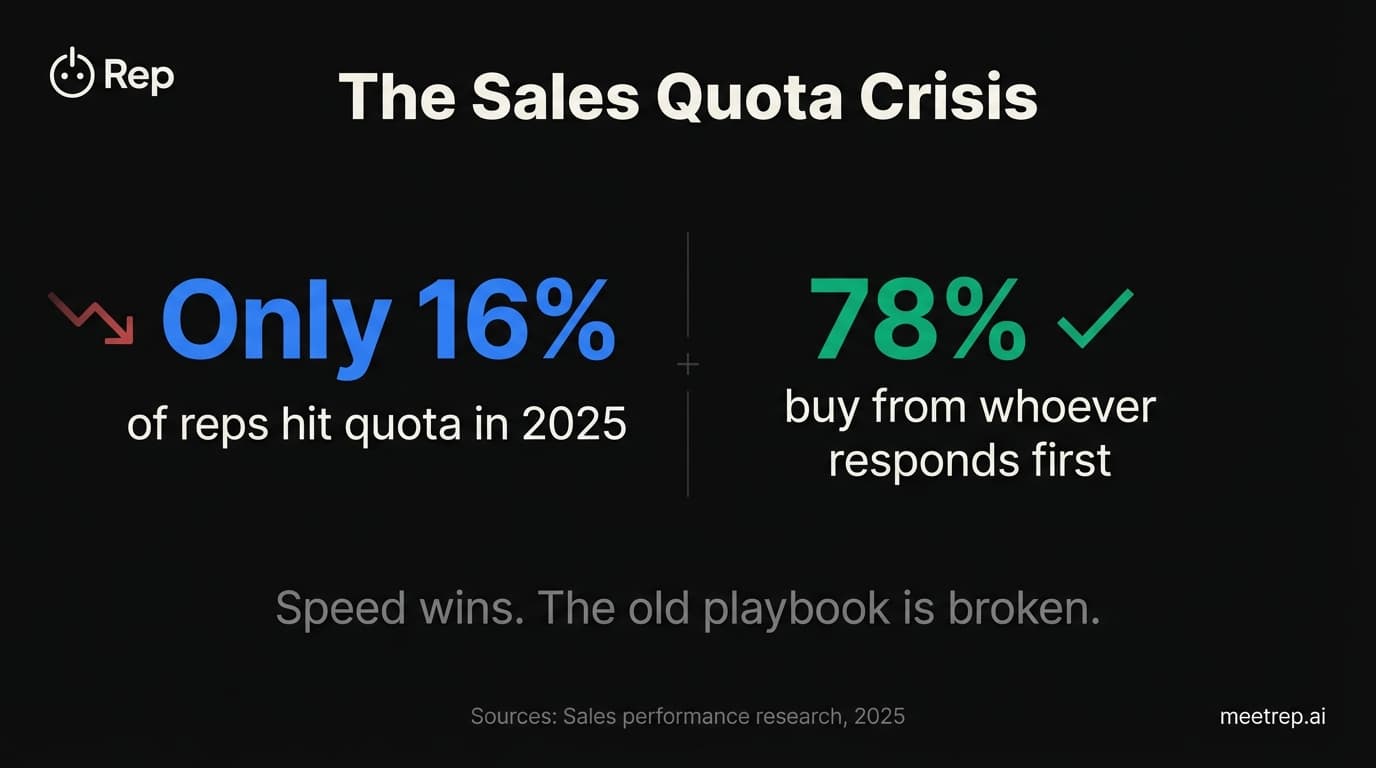
Why Autonomous Sales Software is the Future of B2B Sales (And Why the Old Playbook is Dead)
B2B sales is at a breaking point with quota attainment at 46%. Discover why autonomous 'Agentic AI' is the new standard for driving revenue and meeting the demand for rep-free buying.