3 Signs You're Ready to Hand Off Founder-Led Sales to AI

Executive Summary
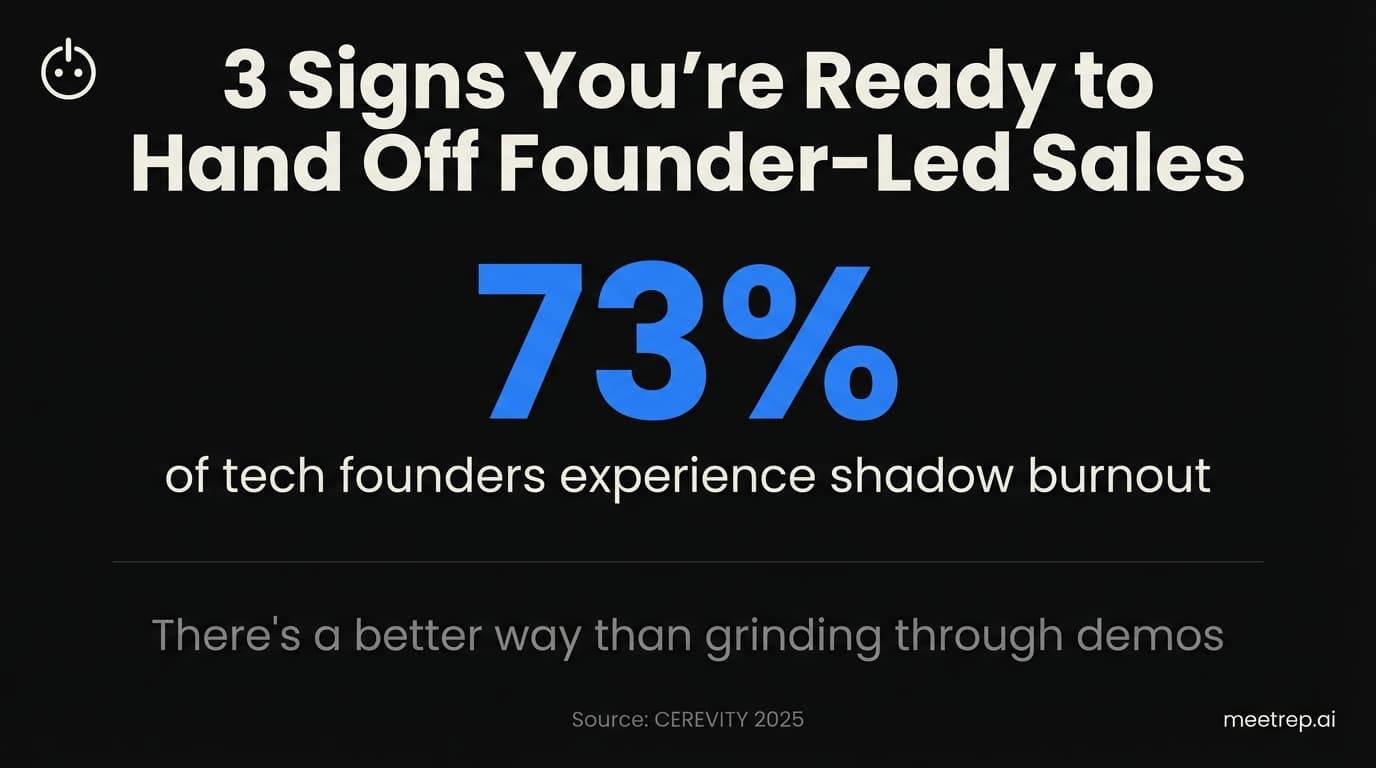
- 73% of founders experience shadow burnout, often from repetitive demo work
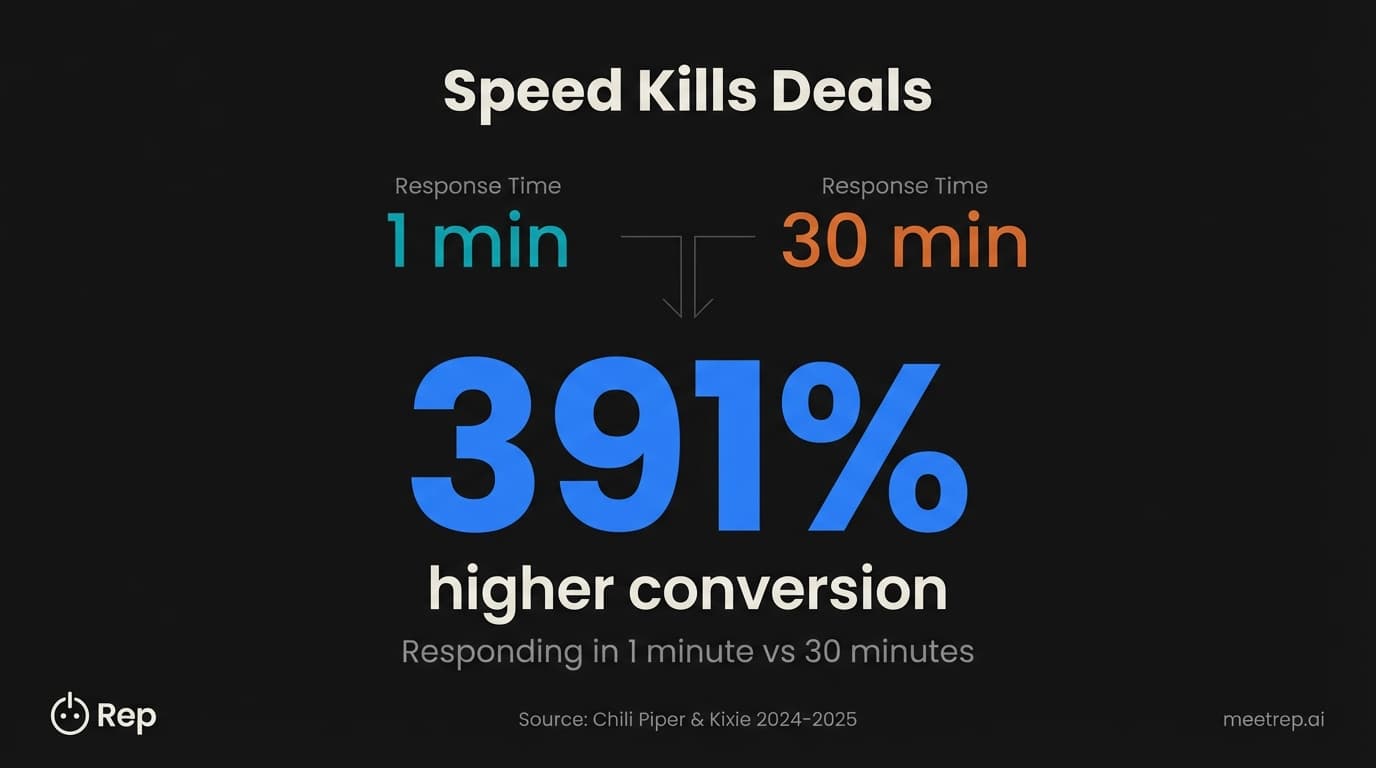
- Leads die when you can't respond in 5 minutes (391% conversion difference)
- First sales hires cost $8K-$15K/month and take 5.7 months to ramp—with 6+ month setbacks if you hire wrong
- Interactive AI demos convert at 38% (vs 18% for generic screenshares) and work 24/7
- AI should handle demo grind BEFORE your first hire, not after
You did 47 demos last month. Maybe 43 of them were identical.
You said the same thing about the same feature at the same point in the walkthrough. You answered the same three questions. And somewhere around demo 38, you stopped feeling anything at all.
That emotional flatness? It has a name: shadow burnout. CEREVITY's 2025 survey found that 73% of tech founders experience it—persistent exhaustion while still hitting their numbers.
I've been there. At GoCustomer.ai, I learned that founder-led sales isn't something you "graduate" from. It's a permanent part of being a founder. But doing every single demo yourself? That's not founder-led sales. That's founder-trapped sales.
Here are the three signs that you're ready to hand off demo duties to AI—and why making that move now might save you from a $50K mistake.
Sign 1: Your Calendar Is 60% Demos and You've Stopped Building Product
Here's the first sign you're ready: demos have taken over your life, and the work that made your company worth demoing is suffering because of it.
Founder-led sales is the process where you—the founder—discover, refine, and close your first customers. It's the phase where you learn what resonates, which objections kill deals, and what makes buyers pull the trigger. That learning is essential. You can't outsource it early.
But somewhere along the way, learning turned into repetition. And repetition turned into exhaustion.
The numbers are rough. Sifted's 2024 survey found that 53% of founders experienced burnout in the past year. A separate Foundology/UCL study showed 93% of founders display signs of mental health strain, with anxiety levels 5x the national average.
Sound familiar?
The Data: 83% of founders report experiencing high stress levels. 49% have considered quitting their startup entirely. Source: Sifted Founder Mental Health Survey, 2024-2025
What you're experiencing isn't weakness. It's math. Every hour you spend on a demo you've given 40 times before is an hour stolen from product development, hiring, fundraising, and strategic thinking.
I call this depleting your cognitive capital—the finite mental energy you have for decisions that actually matter. When you burn it all on repetitive demos, you've got nothing left for the hard stuff.
And that's the trap. Founder demo fatigue doesn't show up as missed quotas. It shows up as slower product iteration, delayed features, and strategic paralysis. The business looks fine. You're not.
What to look for:
- Your calendar shows 10+ demos per week, and most feel identical
- You're using demo prep time to mentally check out, not strategize
- Product roadmap discussions keep getting pushed to "next week"
- You feel nothing—not excited, not frustrated, just flat—before calls
If three or more of these hit home, demo fatigue has moved from inconvenience to crisis.
Sign 2: Leads Are Dying Because You Can't Respond Fast Enough
The second sign is harder to see because it's about what's NOT happening: leads coming in hot and going cold while you sleep, eat, or sit in another demo.
The data on speed-to-lead is brutal. Chili Piper and Kixie's 2024-2025 research showed that responding within 1 minute instead of 30 minutes boosts conversions by 391%. Responding in 5 minutes makes you 21x more likely to qualify a lead than responding in 30.
Here's the problem: Harvard Business Review found that only 1% of B2B companies respond to leads within 5 minutes.
One percent.
So when a qualified prospect requests a demo at 11 PM on Tuesday—maybe they're in a different timezone, maybe they're a night owl finally getting to their research—what happens? They wait. By the time you respond Wednesday morning, they've moved on. LeanData's research shows 78% of customers buy from the business that responds first.
Key Insight: You're not losing deals to competitors with better products. You're losing them to competitors who responded faster. 78% of buyers choose whoever shows up first.
But here's what most founders miss: the speed problem isn't about hustle. It's about physics. You're one person. You can't be in two timezones at once. You can't demo at 2 AM and also function at your 9 AM board meeting.
The buyers aren't being unreasonable, either. Gartner's June 2025 survey found that 61% of B2B buyers now prefer a "rep-free" buying experience. HubSpot's August 2025 research showed 71% of prospects prefer independent research over talking to a rep.
They want information on their schedule. Not yours.
What to look for:
- Demo requests sitting 12+ hours before you respond
- Prospects going dark after you finally offer a time slot
- Multiple leads coming in from different timezones you can't serve
- "We went with someone else" responses where timing was the only variable
Look, this isn't a discipline problem. It's a coverage problem. And you can't solve a coverage problem by working harder.
Sign 3: You've Dreaded (or Botched) the First Sales Hire
Here's sign three: you're exhausted, you know you need help, and the "obvious" solution—hiring someone—feels like jumping from one fire into another.
Your instincts are right.
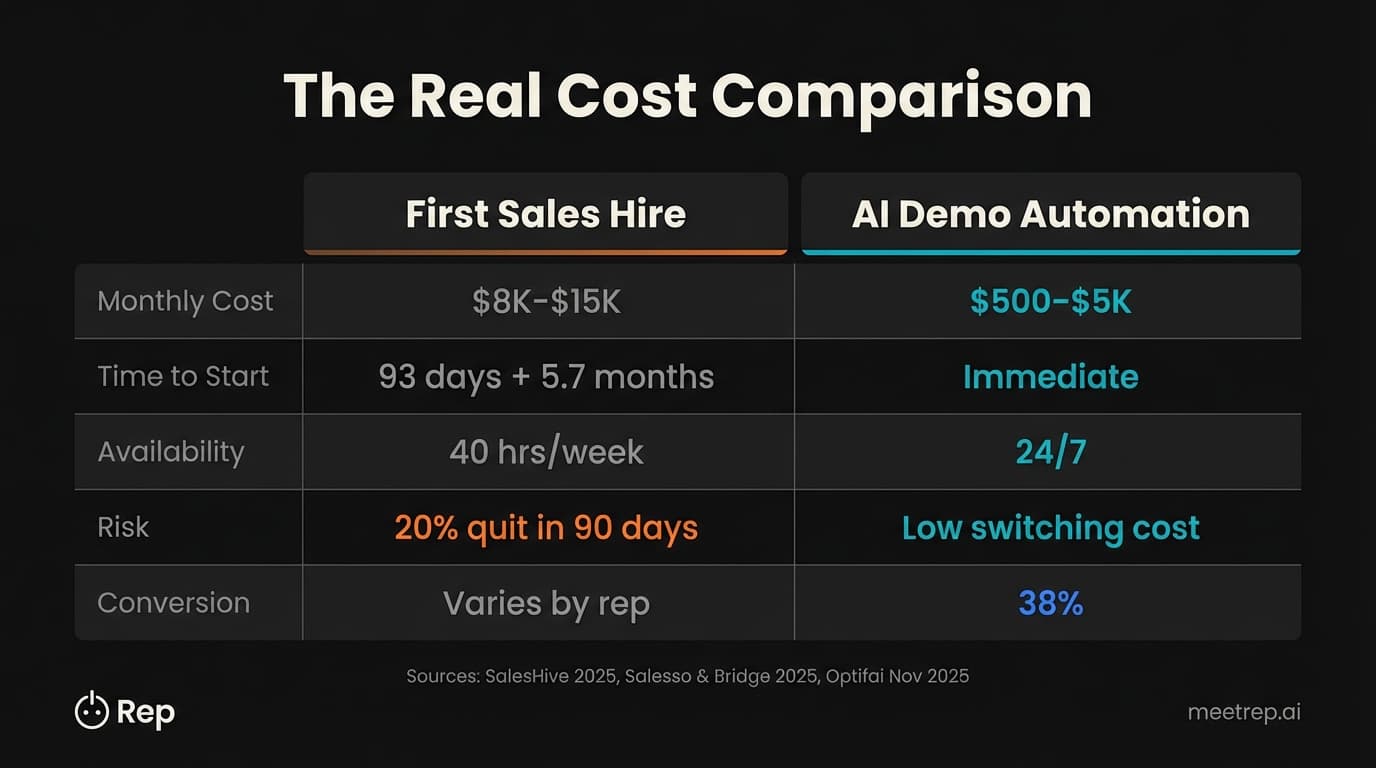
The economics of a first sales hire are worse than most founders realize. SalesHive's 2025 analysis puts the fully loaded cost of an SDR at $8K-$15K per month when you factor in salary, tools, overhead, and training. That's before they close a single deal.
But cost is the easy part. Time is worse.
The Data: Average ramp time for a SaaS salesperson has increased to 5.7 months in 2025—up 32% from 2020. And 20% of new sales hires leave within the first 90 days. Source: Salesso/Bridge Group, Oct 2025
So you're looking at:
- 93 days to complete the hiring process (415 candidates → 1 hire, per Primary VC data)
- 5.7 months to reach full productivity
- 20% chance they quit in the first 90 days anyway
And if you hire wrong? Growth Unhinged's Seth DeHart puts it bluntly: a bad first sales hire sets you back 6+ months. Forbes research estimates the cost at 30% of the employee's first-year earnings—$17,000 to $50,000+.
| Factor | First Sales Hire | AI Demo Automation |
|---|---|---|
| Monthly Cost | $8K-$15K fully loaded | $500-$5K |
| Time to Start | 93 days to hire + 5.7 months to ramp | Immediate |
| Availability | 40 hrs/week | 24/7 |
| Risk | 6+ month setback if wrong; 20% leave in 90 days | Low switching cost |
| Conversion | Varies by rep quality | 38% for interactive demos |
Honestly, here's my hot take: the first sales hire is overrated for most early-stage founders.
Hot take: "Just hire someone to do sales" is advice from people who've never watched a promising startup burn 6 months and $50K on a mishire. The right first hire matters. But the right TIMING matters more—and for most founders, that timing is AFTER you've automated the repetitive stuff.
This doesn't mean you'll never hire. It means you should automate the demo grind first, then hire strategically for the high-value conversations that actually need a human.
Why AI Demos Work Now (And Why AI SDRs Didn't)
If you followed the AI sales space in 2024, you probably have some healthy skepticism. AI SDRs promised the world and mostly delivered noise.
One CRO told TechCrunch in December 2024: "While an AI SDR helped generate a substantial volume of leads over a nine-month period, it did not lead to actual sales."
Arjun Pillai, founder of Docket, shared the underlying problem: "Over the last two years, the reply rate on cold emails fell at least 50%."
AI SDRs tried to solve an outreach problem by adding more volume to a channel that was already dying. More emails into inboxes that were already overflowing. That's not automation—that's pollution.
But AI demos are different.
They're not about sending more messages. They're about responding to existing demand. When someone requests a demo, they WANT information. The question is whether they get it now or in 48 hours.
The data backs this up. Optifai's November 2025 benchmark across 939 companies found that interactive demos convert at 38%—compared to just 18% for generic screenshares. That's a 111% improvement.
The Data: Interactive demos convert at 38% (vs 18% for generic screenshare)—a 111% improvement. AI users are 3.7x more likely to meet quota. Source: Optifai Benchmark Nov 2025, Gartner 2024-2025
And the market is moving fast. McKinsey's November 2025 State of AI report found that 23% of organizations are already scaling agentic AI systems—not chatbots, but autonomous agents that can reason, plan, and execute multi-step workflows.
Klarna deployed an AI agent that now does the work of 853 full-time employees and saves the company $60 million. Salesforce data from January 2026 showed that companies deploying their own AI agents experienced 59% higher growth rates than those without.
This isn't future speculation. It's happening.
2025's "agentic AI" is completely different from the chatbots of 2023. These systems can reason, plan, and execute multi-step workflows—like navigating a product, clicking through features, and answering questions in real-time. HubSpot's State of AI report showed AI adoption among sales reps nearly doubled from 24% to 43% in just one year. And 92% of sales reps now use AI in some capacity.
What Actually Works: The Hybrid Model
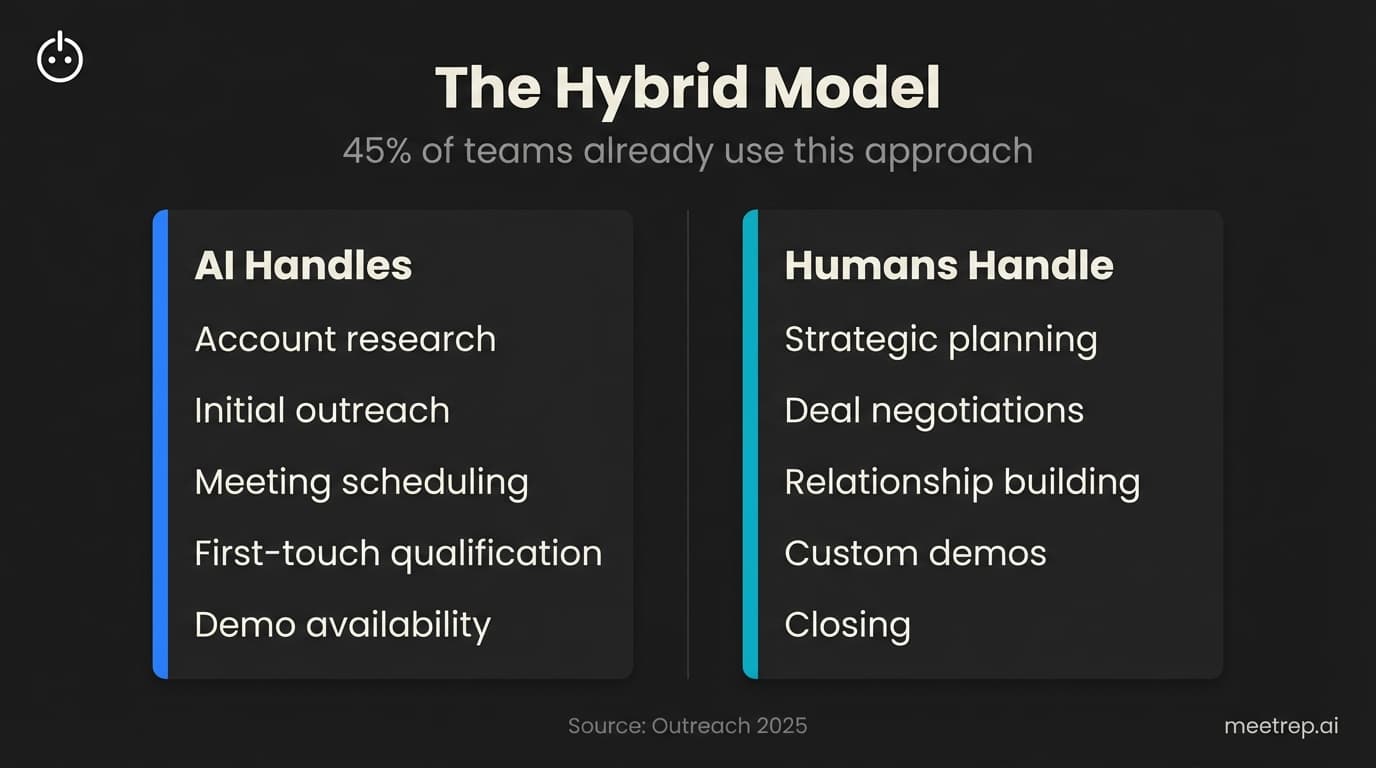
So what should you actually do? The founders I've watched navigate this successfully don't fully "hand off" sales. They split it.
AI handles: Discovery, initial demos, product walkthroughs, FAQ answering, after-hours coverage Founder handles: Negotiation, relationship building, complex deals, strategic accounts
Waseem Daher, CEO of Pilot, led sales for 6+ years—but that didn't mean he did every demo. "I think people try to leave the founder-led sales regime too early," he told the a16z podcast. "And I think it's a big mistake."
Figma's first sales hire, Kyle Parrish, spent his first month in customer support before selling anything. Even three years later, new sales hires had to demo to founder Dylan Field before being allowed to demo to prospects.
The lesson? Founder involvement stays. But founder execution of every repetitive task? That should go.
What we're building at Rep: This is exactly why we built Rep—an AI agent that joins video calls, shares its screen, and navigates your actual product to deliver live demos 24/7. Not a chatbot. Not a video library. A voice agent that converses naturally, answers questions from your knowledge base, and handles the demo grind so you don't have to.
My honest assessment: the goal isn't to remove founders from sales. It's to let you focus on the conversations that actually need you—while AI handles the 43 identical demos that don't.
I started this piece by mentioning the 73% of founders experiencing shadow burnout. Here's what I didn't say: you don't have to be one of them.
The three signs—demo fatigue crushing your cognitive capital, leads dying from slow response, and the dread of an expensive first hire—aren't just problems. They're signals. Signals that you've validated founder-led sales well enough to scale it.
The founders who figure this out don't "graduate" from sales. They clone themselves. AI handles the grind. They handle the trust.
If you're ready to stop doing the same demo 47 times a month, see how Rep works. Your future self—the one who actually has time to build product—will thank you.

Nadeem Azam
Founder
Software engineer & architect with 10+ years experience. Previously founded GoCustomer.ai.
Nadeem Azam is the Founder of Rep (meetrep.ai), building AI agents that give live product demos 24/7 for B2B sales teams. He writes about AI, sales automation, and the future of product demos.
Frequently Asked Questions
Table of Contents
- Sign 1: Your Calendar Is 60% Demos and You've Stopped Building Product
- Sign 2: Leads Are Dying Because You Can't Respond Fast Enough
- Sign 3: You've Dreaded (or Botched) the First Sales Hire
- Why AI Demos Work Now (And Why AI SDRs Didn't)
- What Actually Works: The Hybrid Model
Ready to automate your demos?
Join the Rep Council and be among the first to experience AI-powered demos.
Get Early AccessRelated Articles
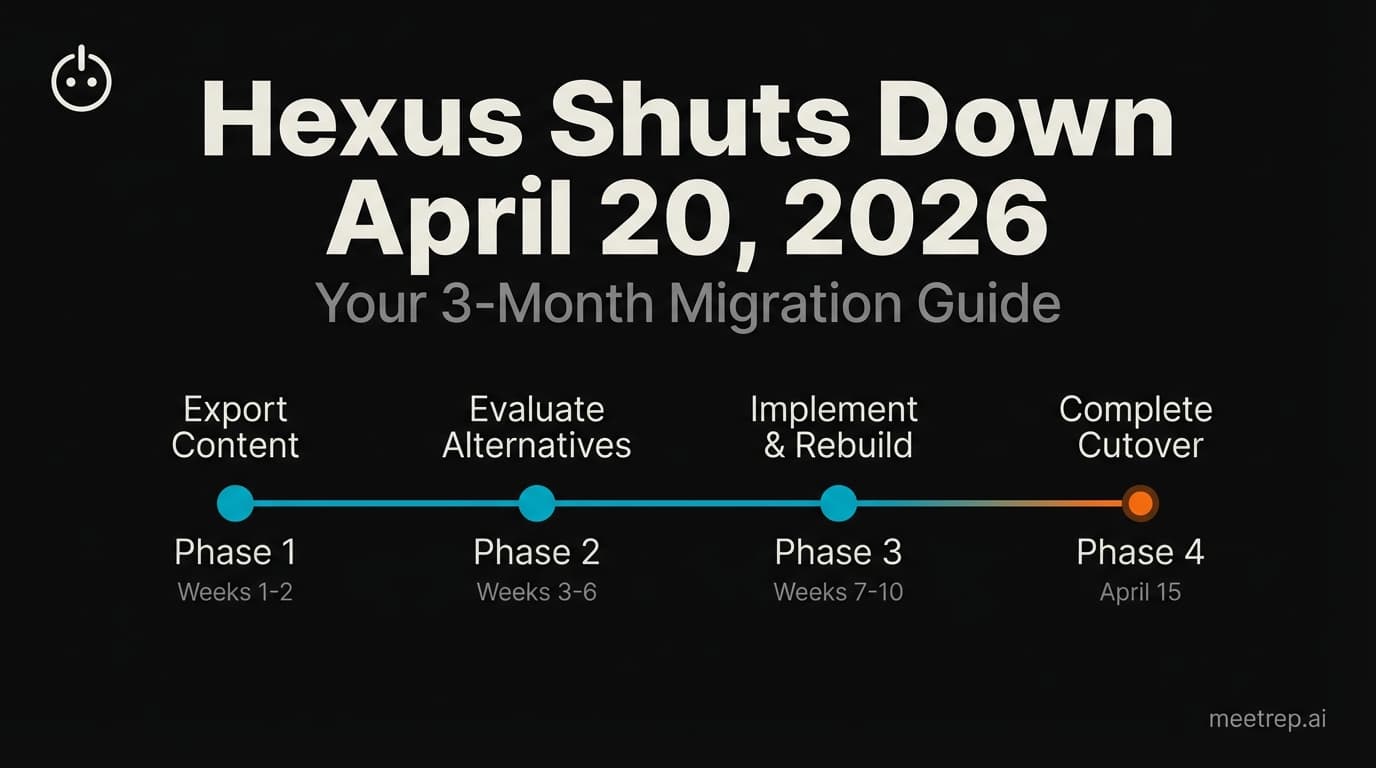
Hexus Acquired by Harvey AI: Congrats & What It Means for Demo Automation Teams
Hexus is shutting down following its acquisition by Harvey AI. Learn how to manage your migration and discover the best demo automation alternatives before April 2026.
Why the "Software Demo" is Broken—and Why AI Agents Are the Future
The traditional software demo is dead. Discover why 94% of B2B buyers rank vendors before calling sales and how AI agents are replacing manual demos to scale revenue.
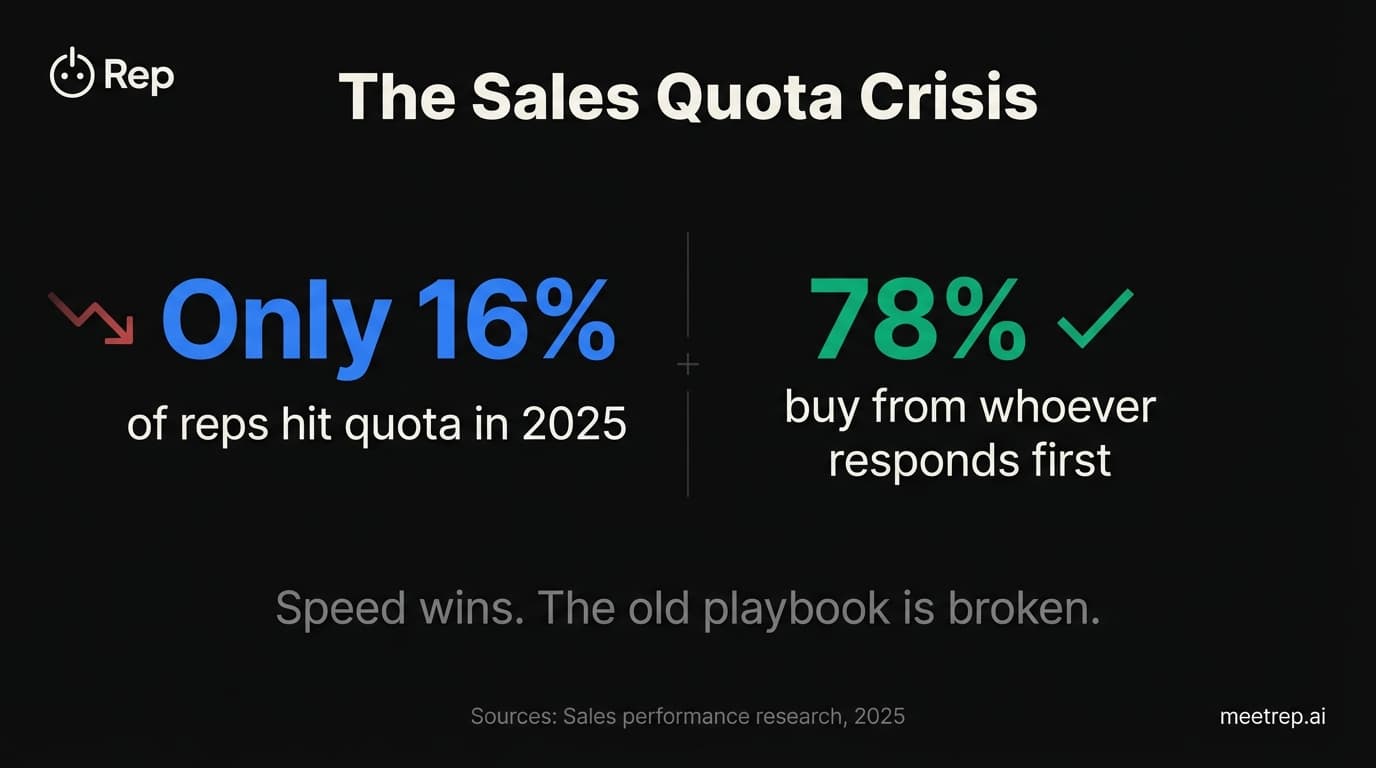
Why Autonomous Sales Software is the Future of B2B Sales (And Why the Old Playbook is Dead)
B2B sales is at a breaking point with quota attainment at 46%. Discover why autonomous 'Agentic AI' is the new standard for driving revenue and meeting the demand for rep-free buying.